
In today’s competitive Nigerian business environment, attracting talent is only half the battle. Keeping that talent is what determines long-term success. High employee turnover drains resources, disrupts operations, and erodes institutional knowledge. For employers, prioritising employee retention is no longer optional, it is a core HR strategy that directly impacts productivity, culture, and profitability.

The True Cost of Losing Talent

Replacing an employee is expensive. Globally and in Nigeria, the cost typically ranges from 50% to 200% of an employee’s annual salary when factoring in recruitment fees, advertising, interviewing time, onboarding, training, and lost productivity during the ramp-up period. In some specialised or senior roles, the figure climbs even higher. Indirect costs such as reduced team morale, knowledge loss, and disrupted customer relationships compound the damage.

Nigeria’s labour market adds further pressure. Many organisations face elevated turnover, especially among skilled professionals and younger workers. Factors like better offers elsewhere, limited career progression, and workplace culture issues rank among the top reasons people leave. When top performers exit, the remaining team often absorbs extra workload, increasing the risk of burnout and further departures. The result is a costly cycle that stalls growth.

Why Retention Matters More Than Ever

Strong employee retention delivers clear advantages:

  • Cost savings: Reducing turnover frees budget that would otherwise go toward constant hiring and training.
  • Stronger workplace culture: Stable teams build trust, collaboration, and institutional knowledge that new hires take time to develop.
  • Higher productivity and engagement: Employees who feel valued and see a future with the organisation contribute more consistently.
  • Competitive edge: Companies known for retaining talent attract better candidates and reduce the time-to-fill for critical roles.
  • Business continuity: Knowledge stays in-house, projects progress without interruption, and customer relationships remain intact.

In short, retention is not just an HR metric. It is a strategic business imperative.

Building a Workplace Culture That Keeps Talent

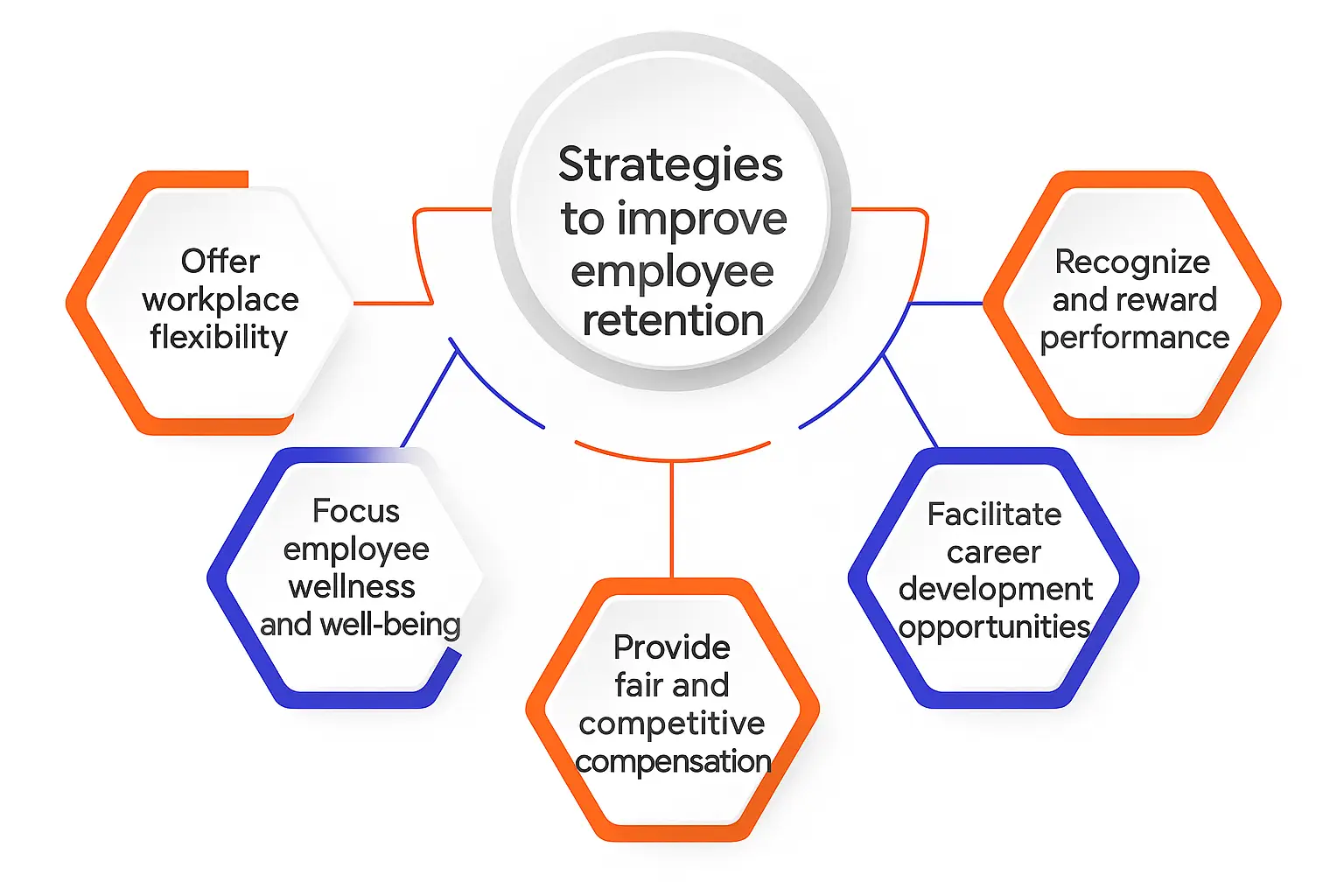
  • Competitive and transparent compensation: Pay and benefits remain foundational. Regular market reviews, clear salary structures, and meaningful non-cash rewards help employees feel fairly treated.
  • Clear career pathways: Employees stay longer when they can see growth opportunities. Defined progression routes, internal mobility, and skills development programmes reduce the pull of external offers.
  • Meaningful engagement and recognition: Regular feedback, recognition of contributions, and open communication make people feel seen. Managers who invest in coaching and development create stronger loyalty.
  • Work-life balance and flexibility: Where possible, flexible arrangements and support for wellbeing address one of the growing reasons employees leave.
  • Strong onboarding and continuous development: A structured start and ongoing training signal that the organisation is invested in the employee’s success and not just filling a seat.

These elements work together because a positive workplace culture reinforces every other retention effort and turns employees into advocates.

How Pelican Staffing Solutions Supports Sustainable Retention

At Pelican Staffing Solutions Nigeria, we understand that hiring the right people is only the beginning. Sustainable retention requires ongoing partnership. As a human capital development company, we help organisations move beyond transactional recruitment to long-term workforce strategies.

Our approach includes:

  • Right-fit recruitment: Careful screening that considers skills, cultural fit, and long-term potential reduces early turnover.
  • Workforce development and training: We support clients with programmes that upskill existing teams, close skills gaps, and create clear growth paths.
  • Strategic workforce management: From permanent placements to flexible staffing models, we help design talent strategies aligned with business goals.
  • Partnership mindset: We work as an extension of your team, understand your culture, and help you build practices that keep top performers engaged.

By combining quality hiring with capacity-building support, Pelican helps organisations implement retention practices that last.

Make Retention a Priority Today

Talent retention is every employer’s priority because the alternative is continuous disruption and unnecessary cost. Organisations that invest in workplace culture, clear HR strategy, and people development build stronger, more resilient teams.

If you are ready to strengthen your approach to employee retention and build a workforce that stays and thrives, partner with Pelican Staffing Solutions Nigeria. We help you attract the right people and create the conditions that keep them.

What Is Talent Retention
Talent retention involves creating an environment where your top employees choose to stay because they feel valued, supported, and see growth opportunities. It’s about building a workplace where people feel appreciated and connected to the company’s vision. This goes beyond paying good salaries; it includes offering opportunities to learn, recognizing great work, creating a healthy work-life balance, and fostering a sense of belonging. When people can see a future with your company, they’ll want to stay for the long haul.

Why Retaining Employees Matters
1. It Saves You Money
Replacing employees can be very expensive. Advertising jobs, interviewing, training, and onboarding all take time and money. In fact, replacing one employee can cost up to twice their annual salary. By focusing on keeping your team happy and engaged, you save both time and money—and build a more stable business.

2. It Improves Performance
Employees who feel valued work better. They’re more productive, more creative, and more committed to the company’s goals. Studies show that engaged employees can boost a company’s profitability by over 20%. That’s what happens when people love where they work.

3. It Strengthens Company Culture
When people stay, they help shape your company’s culture. They understand the values, the mission, and the goals—and they pass that energy on to others. A strong, stable team builds a strong, positive workplace culture.

4. It Attracts More Talent
Happy employees become your biggest advocates. They talk about your company, refer others, and help attract even more great talent. A company that retains its people naturally becomes a place others want to join.

How to Keep Your Best People
If you want your employees to stay, you have to give them real reasons to. Here are four simple but powerful ways to build loyalty and reduce turnover.

1. Help Them Grow
People want to feel like they’re moving forward, not stuck in one place. Offer training, mentorship, and opportunities to learn new skills. When employees see that you’re invested in their growth, they’re more likely to invest in your company’s success.

2. Recognize and Appreciate Them
Everyone wants to feel valued. Take time to acknowledge good work—whether through bonuses, promotions, or even a simple thank-you. Recognition builds pride, motivation, and loyalty.

3. Support Work-Life Balance
Burnout drives good people away. Encourage flexibility, remote work options, and wellness programs. When employees feel cared for as people—not just as workers—they perform better and stay longer.

4. Create a Positive and Inclusive Culture
People stay where they feel respected and heard. Build a workplace that’s friendly, open, and inclusive. Encourage teamwork and communication. When employees enjoy coming to work, retention takes care of itself.

In Conclusion
Keeping your best people isn’t about stopping them from leaving—it’s about giving them every reason to stay. When employees feel supported, appreciated, and connected to your company’s vision, they’ll go above and beyond to help it succeed. As your team grows, so does your business.

Finding the right people for your team is hard work. But keeping them? That’s even harder and far more important. Many businesses spend time and money hiring and training new staff, only to lose them to another company a few months or years later. When that happens, the business doesn’t just lose a worker; it loses time, experience, and energy.

Here’s why keeping good employees should be at the top of every employer’s list.

  1. Losing People Is Expensive
    When a staff member leaves, it costs more than most employers realize. You have to spend money advertising the job, interviewing, and training someone new. And also, the team loses rhythm, projects slow down, and morale drops. Sometimes, the people who stay behind feel stressed because they have to do extra work until a replacement is found.
  2. Loyal Employees Work Better
    People who stay longer understand how things work. They know the customers, the systems, and the company culture. Because they feel comfortable and valued, they naturally do their jobs better. A stable team is often more productive, creative, and confident.
  3. It Improves the Company’s Reputation
    Happy employees talk, and so do unhappy ones. When people enjoy working at a company, others want to join too. But when there’s constant turnover, word spreads quickly. Building a good reputation as a place where people love to work attracts even better talent in the future.
  4. Happy Staff = Happy Customers
    When employees feel appreciated and respected, they treat customers better. They care about doing a good job because they care about the company. That leads to better customer service, stronger relationships, and repeat business.
  5. How to Keep Good People
  • Say thank you often: People stay where they feel appreciated.
  • Give room to grow: Offer learning and promotion opportunities.
  • Be flexible: Life happens, a bit of understanding goes a long way.
  • Listen: Ask for feedback and act on it.
  • Create a positive space: A good work environment makes people look forward to coming in.

Final Thoughts
Employees don’t just work for a company, they help build it. When employers focus on keeping their people happy, everyone wins. Productivity improves, the team gets stronger, and the business grows faster.

At the end of the day, it’s simple: treat your people well, and they’ll stay.